

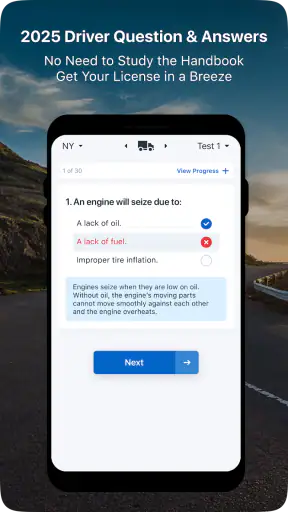
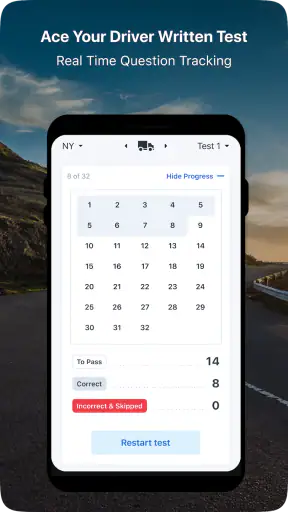
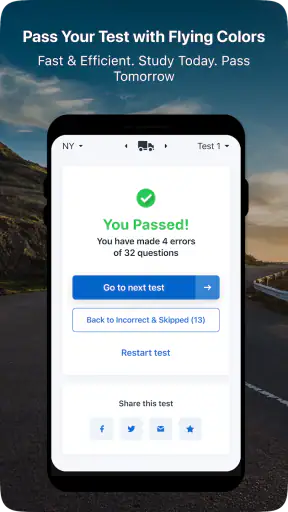
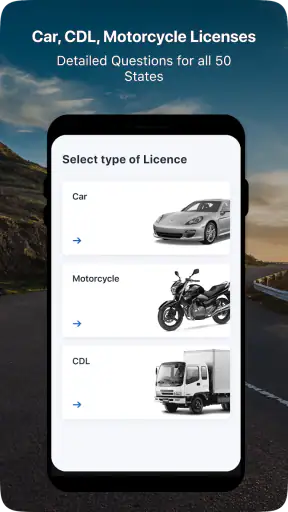
Studying for a driving permit can feel strangely inefficient: the handbook contains the right information, but it does not always show you what you actually remember under pressure. Driver Written Test: 2026 Test takes a more practical route by turning preparation into repeated written-test practice. I found its main value in the question-and-answer cycle: read a prompt, commit to an answer, check the result, and use the mistake to decide what deserves another look.
This is a free Education app from DMV Written Test, aimed at learners preparing for permit exams, driver-license knowledge tests, and commercial driver preparation across the United States. It is available for Everyone, runs on Android 7.0 or later, and has reached over a million installs. Its average rating is 4.7 from around 103 thousand ratings, which suggests that many learners find the format useful, although a high store rating should not replace checking your own state’s official requirements.
Practice questions are the real strength
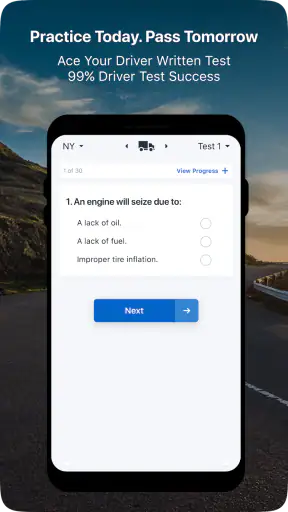
The important capability here is not simply displaying driving information. It is giving me a way to test whether I can retrieve that information without looking at the answer first. That distinction matters. Reading a rule can create a comfortable feeling of familiarity, while a practice question exposes whether I can recognize the correct response when several options look plausible.
I would use the app as an active study layer beside the official driver handbook. The handbook remains the authority for local wording, signs, penalties, and procedures. This app is more useful as a rehearsal tool. It helps transform a long reading assignment into smaller sessions that fit around work, school, or other responsibilities.
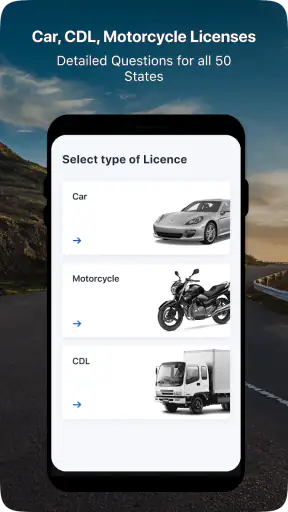
The broad audience is one of its practical advantages. A first-time learner can use it to become comfortable with the style of written-test questions, while someone returning to driving after years away can use short practice sessions to identify rusty areas. The inclusion of CDL preparation also makes it relevant to a different kind of learner, although a commercial applicant should be especially careful to match preparation with the exact licence class and state requirements.
I also like that the app does not require me to treat studying as one long event. A learner waiting for an appointment can complete a few questions, then return later with a clearer idea of what needs attention. That flexibility is more valuable than it sounds because written-test preparation often fails through inconsistency rather than lack of intelligence.
What the question format changes
Practice questions create a feedback loop. When I answer correctly, I gain confidence that I can recognize the rule. When I answer incorrectly, I get a specific signal that my understanding is incomplete, confused with another rule, or too dependent on memorized wording. That makes the next study decision easier than simply rereading an entire chapter.
A useful habit is to separate “I knew it” from “I guessed it.” If I select the correct option only because one answer looks familiar, I treat that result as uncertain. The app can show whether I got the question right, but I still have to be honest about the quality of my reasoning. This is one of the most important ways to avoid mistaking a good practice score for genuine readiness.
Another worthwhile approach is to keep a small mistake list outside the app. I would note the topic, the answer I chose, and the reason the correct answer differs. That turns individual questions into a personal revision guide. It is particularly helpful when the same error comes from confusing similar signs, right-of-way situations, or safety rules.
How I would use it during a normal week
On the first day, I would begin without trying to protect my score. The aim would be diagnosis: which topics feel natural, and which ones cause hesitation? A low early result is not a problem if it reveals where the official handbook deserves closer attention. Starting with a baseline also prevents me from spending most of my time reviewing information I already know.
On later days, I would combine app practice with targeted reading. If a question exposes confusion about a rule, I would open the relevant handbook section rather than repeatedly guessing until the answer becomes familiar. After reading, I would return to practice and check whether I can explain the rule in my own words. This workflow is stronger than using the app as a collection of flashcards.
For a realistic example, imagine a learner who works evening shifts and has a permit appointment coming up. A long study session may be unrealistic, but a short routine before work can still be consistent. The learner could answer questions, mark uncertain topics mentally, and use a weekend session to verify those topics in the state handbook. The app supplies the repetition; the handbook supplies the local legal context.
I would also avoid taking every session in the same mood or setting. If I only practice when relaxed and uninterrupted, I may overestimate my readiness. A better test is to do some sessions when slightly distracted or short on time, not because rushing is ideal, but because it reveals whether the knowledge is stable. The goal is not to create anxiety; it is to discover whether I understand the material beyond one comfortable study environment.
A smarter way to review wrong answers
Wrong answers deserve more attention than correct ones, but not all mistakes mean the same thing. If I misread the question, I need to slow down and identify the key condition. If I knew the rule but confused two answer choices, I need comparison practice. If the subject is unfamiliar, I need to return to the handbook and learn the underlying idea.
I would not immediately repeat a missed question until I can recognize the correct option. That can produce a false sense of progress because the wording is still fresh. Instead, I would study the rule, wait until a later session, and see whether I can solve a similar problem without relying on memory of the previous screen.
This is also where the app’s broad preparation scope requires judgment. A learner preparing for an ordinary permit should not allow commercial-driver material to distract from the relevant state test. Someone pursuing a CDL, on the other hand, should not assume that general car-driver questions cover everything needed for a commercial exam. The app can support preparation, but the learner must choose material with a clear target.
The best use case: structured rehearsal before the exam
The app is at its best when I already have access to the official material and need a repeatable way to rehearse. It is not a replacement for understanding traffic law. It is a tool for converting passive reading into active recall, especially during the final stretch when I want to know whether the information is sticking.
For a beginner, I would start with the handbook, then use the app after each major topic. For example, after studying signs, I would practice questions related to signs rather than jumping randomly through every subject. This makes the feedback more meaningful because I can connect a mistake to something I have just studied.
For a learner who has already failed a written test, the app may be especially useful as a confidence repair tool. Instead of studying everything again without direction, that person can use practice to locate weak areas. Still, I would treat repeated failure as a reason to change the study method, not merely to answer more questions. Reading explanations carefully, asking an instructor for help, or using the official handbook more deliberately may be necessary.
It can also help families supporting a new driver. A parent or friend can ask the learner to explain why an answer is correct rather than simply asking for the letter or option. That turns solitary practice into a conversation about safe decisions. The app provides the prompt, while the discussion checks whether the learner understands the reasoning.
For multilingual learners, question practice can reveal whether the difficulty is driving knowledge or language comprehension. If the learner repeatedly misunderstands the wording, more time with plain-language explanations or an instructor may be better than simply increasing the number of practice attempts. A correct answer is useful only when the learner understands the rule behind it.
When another resource is the better choice
I would choose the official state handbook first when the question concerns exact local rules, administrative steps, required documents, or state-specific penalties. The app’s purpose is practice, while the handbook is the place I would verify details that could change from one jurisdiction to another.
I would choose an instructor or classroom course when I need feedback on judgment rather than recognition. Written questions can test knowledge, but they cannot fully show how I scan an intersection, position a vehicle, manage distractions, or respond to an unexpected road situation. Someone who is nervous behind the wheel needs practical coaching as well as written preparation.
I would also look for a more specialized resource if my exam has a narrow focus that requires detailed technical material. The app’s coverage of general driver preparation and CDL study is convenient, but convenience should not be confused with complete preparation for every licence category. The closer the exam is to a specialized endorsement or professional qualification, the more carefully I would compare the study material with the official exam outline.
Tradeoffs worth understanding before installing
The app is free to download, which makes trying the practice approach easy. It also includes optional in-app purchases ranging from about eleven dollars to about thirty-nine dollars per item. I would begin with the free experience and decide whether the question format genuinely improves my study before paying for anything. A purchase is worthwhile only if it gives me material that matches my target and helps me correct weaknesses, not merely because I feel pressure to unlock more practice.
The existence of paid items also means the app may not suit someone who wants every study resource available without spending money. A learner working from an official handbook and free local resources may prefer to keep preparation completely free. In that case, the app can still be tested as a supplementary tool, but I would not assume that paying is necessary to pass.
Another tradeoff is repetition. Repeated questions can build recall, but repetition without reflection can train recognition of familiar wording instead of flexible understanding. If I keep seeing the same prompts, I would deliberately explain the rule aloud and connect it to a real road situation. That extra step reduces the risk of memorizing an answer pattern.
The app also cannot decide whether I am truly ready. A strong practice result may show that I have learned the material, but it may also show that I remember a limited set of questions. I would judge readiness by consistency across several sessions, confidence in explaining the rules, and successful verification against the official handbook. This is a more demanding standard, but it is safer.
There is a small psychological tradeoff too. Practice scores can motivate some learners and discourage others. If a low score makes me avoid studying, I would use the result privately as a diagnostic rather than treating it as a judgment. If high scores make me complacent, I would review the reasons behind my answers and revisit topics I guessed correctly.
Version, access, and day-to-day fit
The current version is 2.3.0, and the app supports Android devices from version 7.0 onward. That makes it accessible to people using older compatible Android phones, which is useful when a learner does not have a recent device. I would still make sure the phone is comfortable for reading and answering questions, because a cramped or distracting setup can turn a useful study tool into an irritating one.
Since it is an app rather than a physical book, it fits naturally into spare moments. That convenience is its strongest everyday advantage, but it can also encourage shallow sessions. I would set a specific purpose before opening it: diagnose weak areas, review a topic, or test readiness. Without that intention, tapping through questions can become a habit that feels productive without producing much learning.
The Everyone content rating makes it suitable for general learners, including teenagers preparing for their first permit. Adults returning to study should find the same basic approach approachable, although the right level of preparation depends on the exam they face. The developer is DMV Written Test, and the app is clearly positioned around written-test preparation rather than driving instruction in the vehicle.
Who gets the most value from it
I think the best match is a learner who has a handbook, a defined exam goal, and trouble maintaining a regular study routine. The app supplies structure without requiring a desk, a class schedule, or a long uninterrupted session. It is also a good fit for someone who wants immediate evidence of weak topics rather than relying on the vague feeling that they have read enough.
It is less suitable for someone looking for complete driving education in one place. It will not replace supervised practice, professional instruction, or the official information issued by the relevant licensing authority. It is also not the right sole resource for a learner who needs detailed local confirmation or specialized commercial preparation.
My recommendation is to use it in three layers: official material for accuracy, this app for retrieval practice, and real instruction for judgment and vehicle control. That combination gives each resource a clear job. The app is strongest when it prevents passive reading from being the only study method.
After using it this way, I see Driver Written Test: 2026 Test as a practical rehearsal companion rather than a complete course. Its 4.7 average and large user base make it easy to consider, but the more important question is whether its practice cycle changes how you study. For me, it does when I review mistakes deliberately, connect questions to the handbook, and resist treating a familiar score as proof that every rule is understood.
If you want a free starting point for written-test practice, especially one that can fit into short daily sessions, I would recommend giving it a try. I would keep the official handbook beside it, choose material that matches my licence goal, and avoid paying for extra content until the basic workflow proves useful. Used with that discipline, it can make permit preparation more focused, less passive, and much easier to organize.


